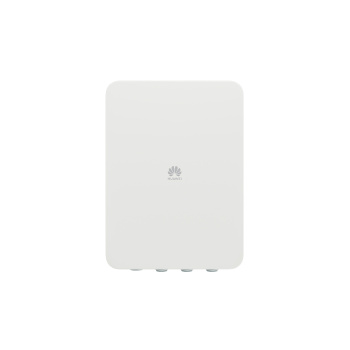
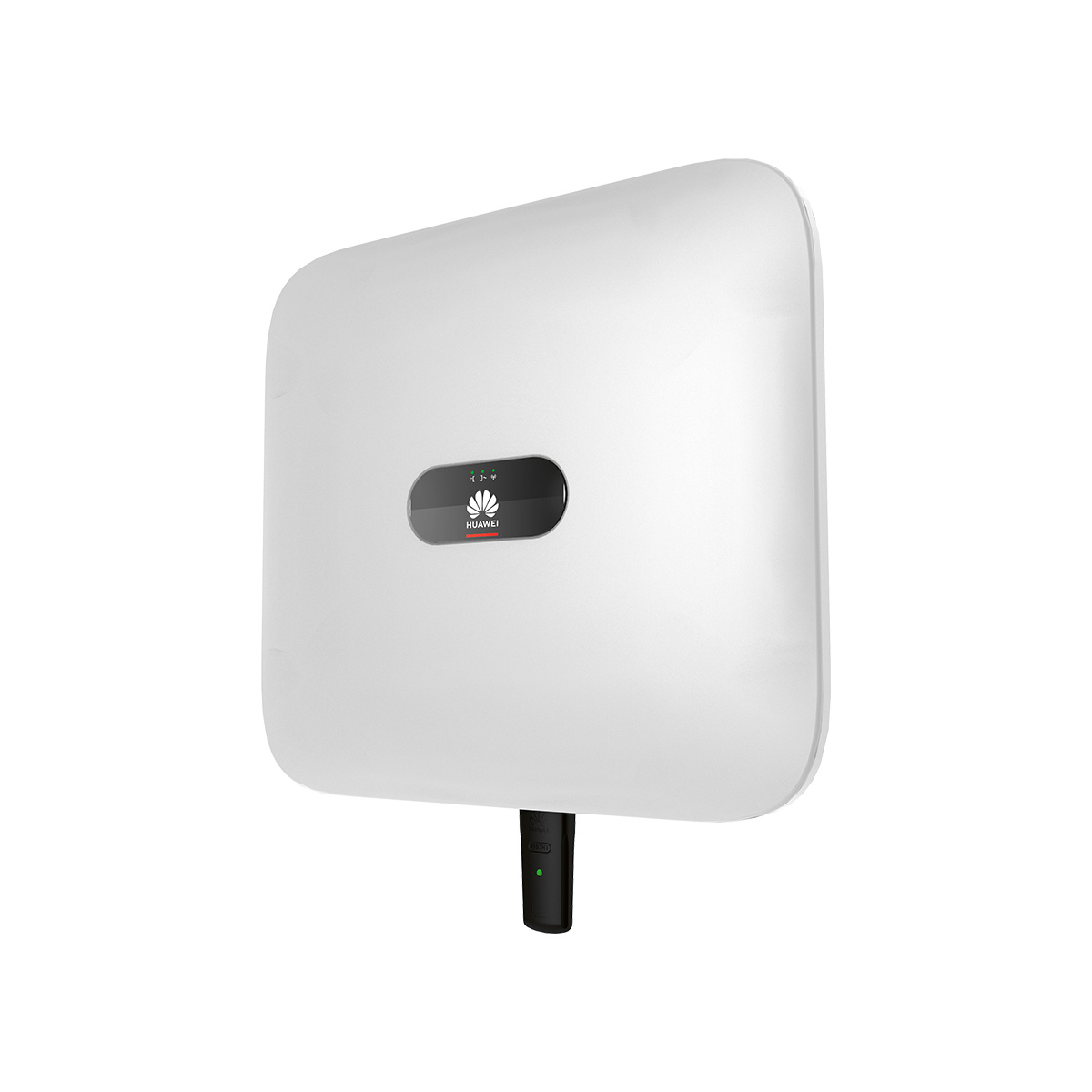
Huawei SUN2000-4KTL-M1
The Huawei SUN2000-4KTL-M1 is a three-phase hybrid string inverter for PV systems in the lower power range. With 4kVA AC rated power, two independent MPP trackers, and a maximum permissible DC voltage of 1,100V, it is suitable for modern high-voltage module configurations with variable string lengths. The extended MPP voltage range from 140V to 980V offers high planning flexibility, even for partially shaded generator fields. The hybrid topology allows for the later integration of high-voltage battery systems without additional DC converters. Features such as AI-based arc fault detection (AFCI), integrated surge protection concepts (TypeII DC/AC), and comprehensive grid protection mechanisms support compliant and safe operation. Thanks to compact dimensions, low weight, and plug-and-play installation, the inverter is designed for efficient deployment.
 TechnologyThe internal technology of the SUN2000‑4KTL‑M1 is based on a transformerless, three-phase hybrid topology with natural convection as the cooling principle. Two MPP trackers allow separate control of different module strings, which particularly reduces yield losses in cases of varying roof orientations or partial shading. The high maximum efficiency of 98.3% and a European weighted efficiency of 97.1% ensure low conversion losses across a wide load range. The high permissible DC input voltage range of up to 1,100V enables long strings and reduces string-side cable losses as well as material requirements on the DC side.
Relevant system features- Two MPP trackers for flexible string distribution and optimized yields under heterogeneous generator conditions
- Wide MPP voltage range for long strings and efficient high-voltage design
- Transformerless design with high partial-load and full-load efficiency
- Natural convection cooling reduces wear and maintenance requirements
 ConnectivityFor system communication, the inverter provides an integrated RS485 interface, which is particularly used for connecting smart meters or energy management components. WLAN and Ethernet functionality can be implemented via optional smart dongles, enabling flexible adaptation to project-specific monitoring requirements. Additionally, 4G communication is available via a separate dongle, allowing use even at locations without local network infrastructure. Integration into the FusionSolar platform supports commissioning, monitoring, and fault diagnosis via central software tools.
Interfaces & Monitoring- RS485 for meter, sensor, and system integration at fieldbus level
- WLAN or Ethernet via Smart Dongle for local or network-based data connectivity
- Optional 4G connectivity for locations without fixed network infrastructure
- Centralized parameterization and monitoring via the FusionSolar management system
 WarrantyThe SUN2000‑4KTL‑M1 is supplied with a standard product warranty of 10 years. This long warranty period meets the typical requirements in professional system engineering and supports a predictable lifecycle assessment. In addition to the warranty, the inverter integrates extensive protection functions such as anti-islanding monitoring, DC reverse polarity protection, insulation monitoring, residual current monitoring, and AI-based arc fault detection. These functions help reduce fire and grid risks and facilitate compliance with relevant grid and safety standards during installation.
Warranty & Protection- 10-year standard product warranty for long-term planning reliability
- Integrated AFCI function for early detection of DC arc faults
- Comprehensive grid and device protection functions for compliant operation
- DC and AC surge protection TypeII integrated as standard
 SustainabilityIn the area of sustainability, the inverter is designed with a resource-efficient construction and packaging concept. The compact housing with a weight of around 17kg reduces material usage and simplifies transport and installation. Huawei also pursues a global recycling concept for end-of-life devices, allowing electronic components to be returned to the materials cycle. The high efficiency of the device also contributes to reducing systemic energy losses over the entire operating life, thereby improving the overall environmental balance of PV systems.
Ecological aspects- Compact design with reduced material and transport requirements
- High efficiency levels to minimize systemic energy losses
- Recycling programs for end-of-life devices and electronic components
- Packaging concepts with reduced plastic content
 QualityThe device quality of the SUN2000‑4KTL‑M1 is reflected in its robust design for both outdoor and indoor applications. The IP65 protection rating allows use in protected outdoor installations as well as in technical rooms. Operation is designed for ambient temperatures from −25°C to +60°C, with power derating under extreme conditions. The fanless cooling reduces mechanical wear components and increases long-term reliability. This is complemented by integrated monitoring functions that support early fault detection during ongoing operation.
Mechanical & electrical robustness- IP65 protection rating for flexible installation in indoor and outdoor areas
- Wide temperature range for reliable operation under varying climatic conditions
- Fanless design to reduce maintenance-relevant components
- Integrated status and fault monitoring for stable system operation
 ExpandabilityThe SUN2000‑4KTL‑M1 is consistently designed for expandability. Thanks to the integrated high-voltage battery interface, the device can be combined with Huawei Smart String ESS storage systems without hardware replacement. In addition, the connection of Smart PV optimizers is possible, enabling module-level yield optimization and module monitoring. In combination with components such as SmartGuard, EMMA energy management, and compatible backup boxes, the system can be gradually expanded into advanced self-consumption or backup power solutions.
System integration & expansion- Prepared high-voltage battery interface for future storage integration
- Compatibility with Huawei Smart PV optimizers for module-based optimization
- Integration into energy management and backup systems possible
- Scalability within the Huawei ecosystem for future requirements